



Olga Summers and Sandra Froher use fashion as a form of reflection; their work reveals their understanding of how identity is shaped, carried, and reimagined.
Clothing rarely begins as just something we wear. It carries memory, heritage, and the imprints of lives lived before it ever reaches the runway. For designers Olga Summers and Sandra Froher, fashion is the medium through which they explore identity—not only in what they create, but also in what each design carries.
Although their design practices differ, Olga and Sandra are guided by a shared desire to understand where they come from and how those experiences influence their work. Olga Summers centres on how clothing encourages confidence, comfort, and our relationship with our bodies, while Sandra Froher’s work is rooted in land, memory, and cultural lineage.
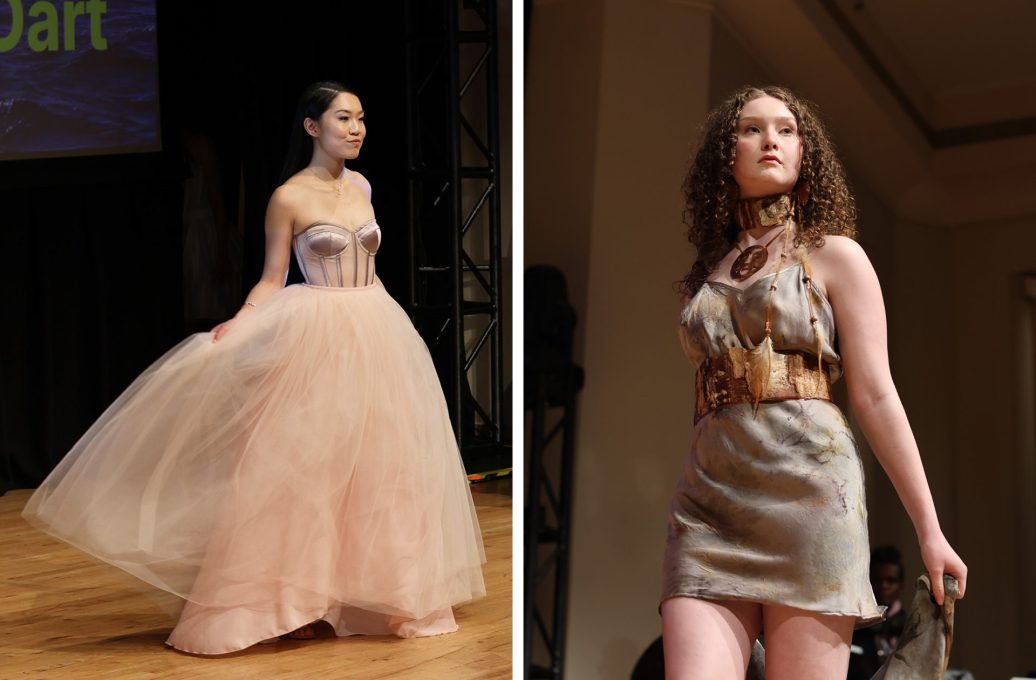
Brought together alongside nine other designers at the Better Together Gala x Fashion Show in Victoria, B.C., Sandra and Olga found a point of convergence to reexamine how personal history takes form through fashion. The event offered the two designers an opportunity to revisit the origins of their practice, connect with other creatives, and share with us what continues to inspire their work.
Olga: The Magic of Craftsmanship and Self-Discovery
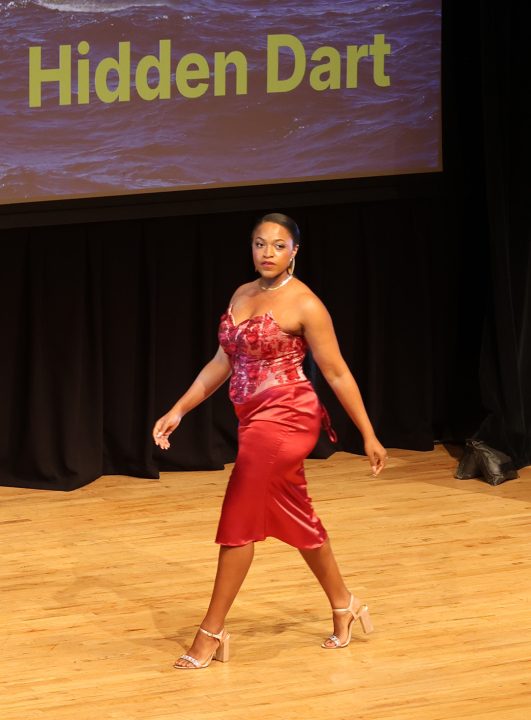
Olga’s participation in the Better Together x Fashion Gala was both a professional milestone and a moment of reflection. Her work appeared on a two-story billboard, with one of her designs greeting guests at the entrance. And yet, despite this visibility, Olga describes herself with striking humility: “I’m just a seamstress sewing in the basement”, a statement that belies years of craftsmanship and a creative lineage passed down through her grandmother.
Although she has participated in runway shows before, the Fashion Gala felt both familiar and unexpectedly surreal. At times, there was a quiet disbelief at being part of such a large-scale event, alongside a lingering sense of comparison with the other designers around her. She recalls feeling overwhelmed by the pace behind the scenes—the constant movement, the range of creative disciplines, and the shift between preparation and presentation.
Over time, the experience became less about performance and more about presence: being part of a creative community shaped by diverse perspectives. It was also an opportunity for Olga to showcase something personal: what it looks like to pursue one’s passion with intention and purpose.
The Family Thread
That connection began with her grandmother, who first introduced her to the “magic” of sewing and craftsmanship. Coming from Eastern Russia, the two experienced immigration differently. Olga’s grandmother arrived in Canada as an adult, facing the common challenges of starting over in a new country—from learning a new language to navigating unfamiliar traditions. Olga, on the other hand, assimilated into Canadian culture more quickly as a child. However, she grew up navigating the space between the two worlds, and sewing turned into one of the strongest threads binding them together.
Her grandmother was both her teacher and biggest supporter. Sewing was their shared language, one that carried care, patience, and continuity across generations. This “magic” represents a language of self-discovery that continues to form Olga’s craft and creativity. Whether making her grandmother’s Russian dumplings or working with fabric, her grandmother taught her to be fully present in the moment, to appreciate a slower pace, and to trust the process rather than rush the outcome.
Designing for Comfort, Presence, and Confidence
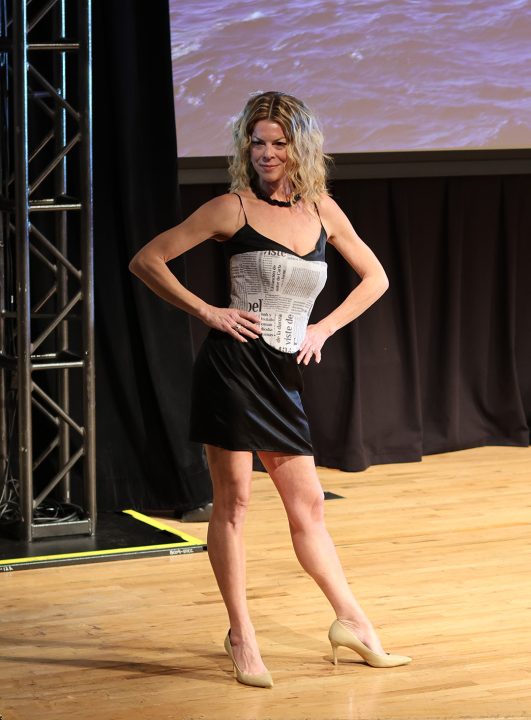
Those lessons now guide Olga’s approach to her work. She prioritizes structure and craftsmanship over surface embellishment. For her, beauty cannot exist without comfort; a piece may be visually striking, but if it restricts movement or undermines confidence, it loses its impact.
Because of this, she often moves away from standardized sizing, focusing instead on custom pieces and alterations that help the wearer feel at ease in their body.
For Olga, beauty cannot exist without comfort; a piece can be visually striking, but if it restricts movement or undermines confidence, it loses its impact.
Olga believes her impact as a designer lies not in bold statements but in subtlety. She wants people to feel seen in her designs, confident in their bodies, and comfortable with how they move through the world. By prioritizing craftsmanship, her work carries a quiet presence—one that is experienced rather than announced. In a setting like the Fashion Gala, where garments are seen in motion, this philosophy becomes especially tangible.
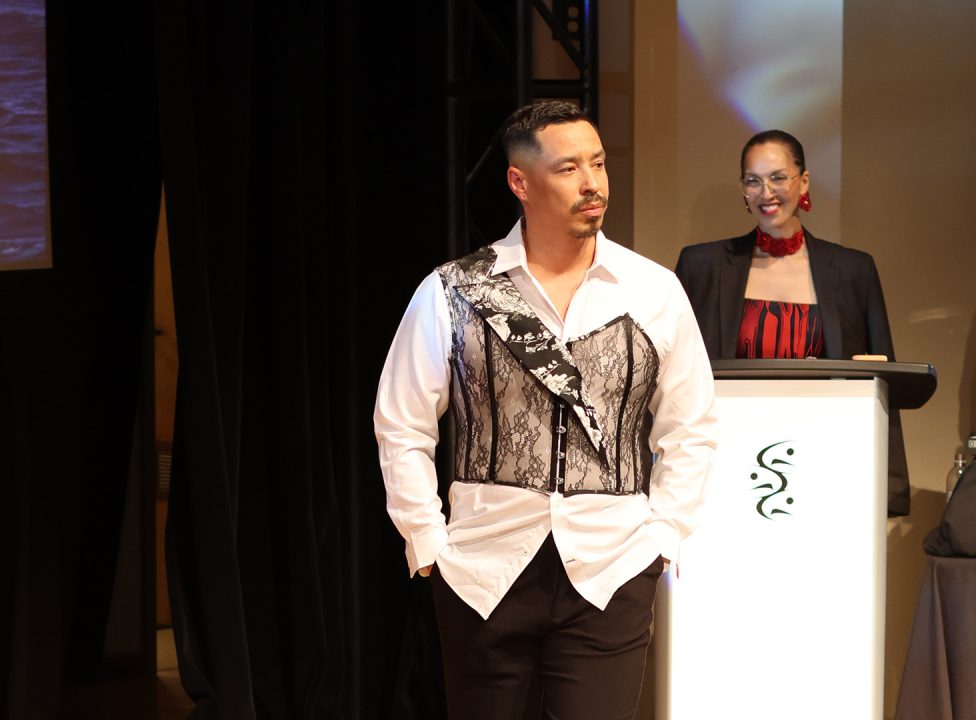
Olga’s path into fashion design has not been linear. As a mother, she reached a point where she felt disconnected from herself, uncertain about who she was beyond that role. Only a few years ago, she returned to her passion, building her own brand and creating garments on her own terms. The Fashion Gala marked not an arrival, but a continuation of that process.
Sharing the experience with her daughter made the moment more meaningful. She found it deeply special that her teenage daughter chose to spend the evening with her, at an age when teenagers often pull away from their parents. Olga was proud to see her daughter come out of her shell and become genuinely excited about fashion, even sketching ideas inspired by what she saw on the runway. In that moment, she thought of her grandmother and the “magic” passed down years earlier.
For Olga, this reflects something deeper about inheritance—not only of culture, but of creativity and passion itself. Although her children do not speak Russian, she continues to pass down her grandmother’s lessons through shared traditions, handmade crafts, and the simple act of making things. What was once passed down to her continues forward in new ways.
Sandra: Fashion as an Offering to Heritage
While Olga’s work highlights the relationship between the body and clothing, emphasizing how attire can impact a person’s presence and confidence, Sandra Froher’s designs are grounded in the land and collective memory. Each piece reflects her efforts to reconnect with her past, exploring the stories that have shaped her community and the intricate connections to water and land essential to her heritage.
Sandra Froher comes from the Stó:lō Nation, the river people, whose communities have long been connected to the Fraser Valley and Lower Fraser Canyon in British Columbia. For the Stó:lō people, the land and water are not only part of the landscape; they hold customs, teachings, and connections passed down through generations. Their relationship with the land is deeply connected to the Creator and Xexá, transformers who shaped the world and restored balance.
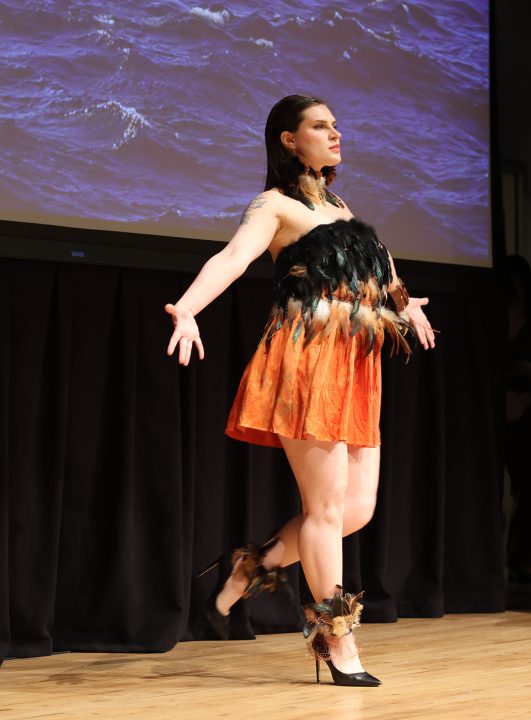
For Sandra, that connection was not always immediately accessible. When asked about her artistic path, her answer is immediate: “Art chose me, not the other way around.”
When the COVID-19 pandemic slowed the pace of everyday life, she used the time to reconnect with the roots that continue to inform her practice. Her work is grounded in that process of return. As someone whose relationship with the self has been impacted by generational distance, she approaches art and design as a way of reclaiming her culture.
“Art chose me, not the other way around.” – Sandra Froher
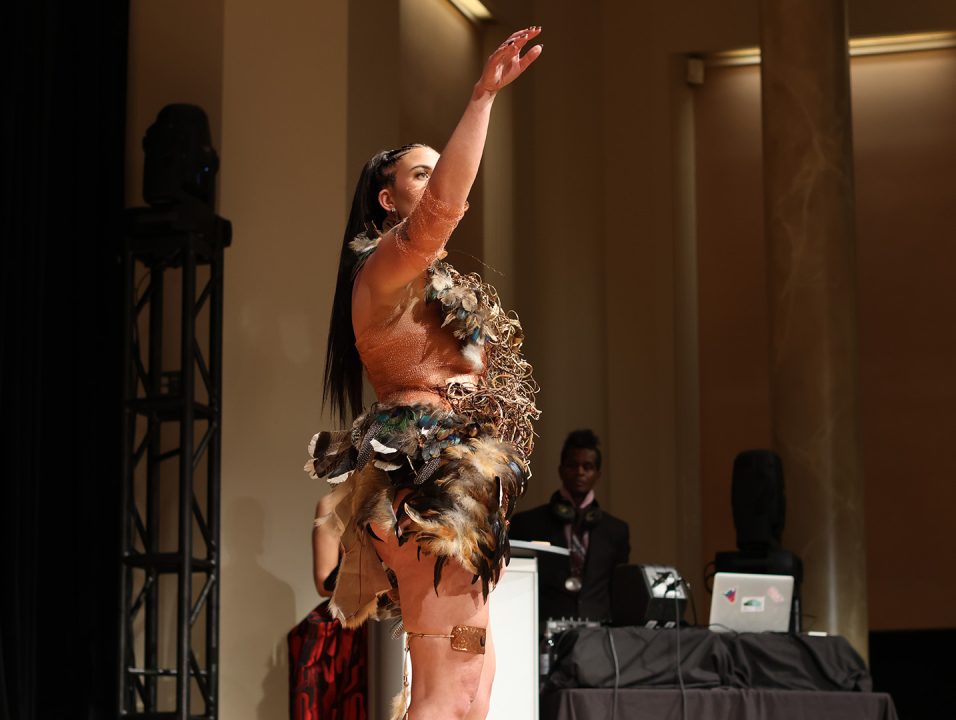
One of her main pieces for the Fashion Gala—a bodice made of seaweed, feathers, and copper—draws from this relationship with land and water. The piece became, in her words, “a contemporary interpretation of movement, change, and our resilient relationship with the natural world,” an offering to the waterways of her people that carry these memories.
Creating with Purpose
Sandra considers her designs as both a gift to the world and to herself; a way of sharing something personal. Each garment reflects her experiences, perspective, and the values she holds and honours.
With experience, she has come to understand that each piece reveals itself in its own time. Some demand quick action, while others ask for pause, reflection, and patience until the right conditions emerge. She feels that rushing the process risks losing its integrity. Her seaweed bodice, for example, took nearly three years to complete. The process required repeated trips to the water to find the right seaweed—the ideal texture, thickness, and flexibility to hold the bodice’s form. Each attempt that did not work turned into part of the process itself, reinforcing the patience behind her practice.
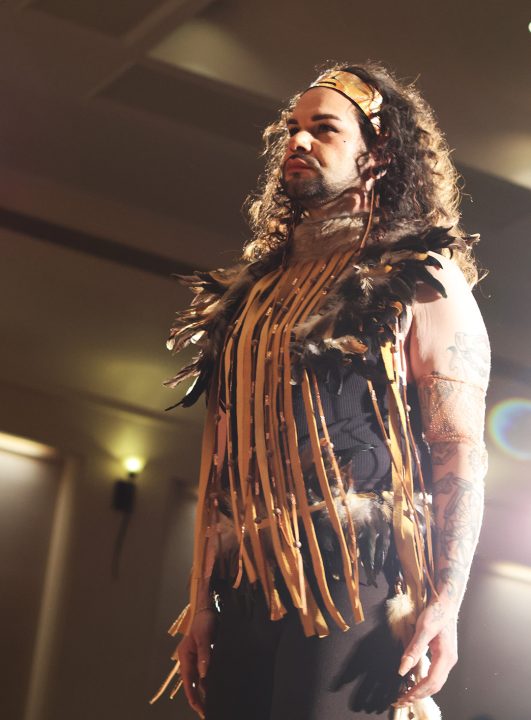
Sandra’s experience at the Fashion Gala mirrors a broader approach in her creativity. She describes her work as “celebrating a piece of [my] heritage in a contemporary way,” merging old and new approaches to create space for reflection and curiosity. She continues her practice as she reclaims narratives once marked by silence and reframes them with presence and visibility.
Stories Woven Through Fabric
For Olga Summers and Sandra Froher, the Fashion Gala was more than a presentation of finished pieces. It was a moment where personal history and creative practice quietly overlapped, showing how clothing can hold what we inherit, what we lose, and what we continue to carry forward.
In their work, fashion becomes less about expression and more about what remains with us—long after the fabric has been cut, sewn, and worn.