



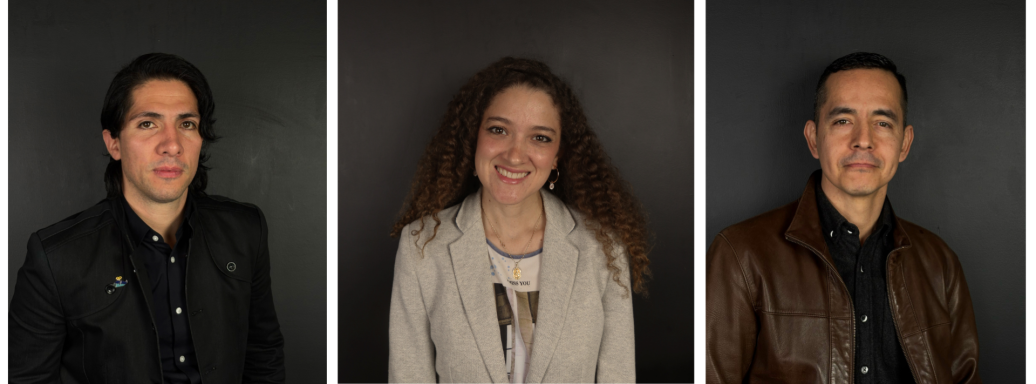
From biophilic interiors to bespoke millwork and relationship-driven construction, three designers reflect on how their move to Canada has transformed how they think about design, space, and community.
Design is shaped as much by lived experience as it is by training and technique. When designers move across borders, their work becomes a reflection of their customs, traditions, and adaptation. As part of the Design Victoria creative festival held in Victoria, B.C., Canada, in May 2026, the ‘Design Beyond Borders’ panel hosted by the Pacific Design Academy examined how migration, culture, and personal experiences evolve design practices in Canada.
Featuring three designers originally from Mexico, Ana Carreño, Felipe Prado, and Dany Mantecón, the panel discussion highlighted how relocation rewires designers’ thinking about space, function, and relationships. The designers shared how moving to Canada and setting down roots have brought new lessons and adaptations not only to their personal lives but also to their professional journeys.
Seeing space through a different lens
Ana Carreño moved from Mexico City to start a new life with her Canadian husband in Victoria, B.C. She faced the common challenges of a newcomer, like language and cultural differences, but true to her profession, she viewed them through a designer’s eyes. Her earliest impression was of how family spaces were used. “When I moved to Canada, one of the first things I noticed was how quiet the houses were,” Ana recalls on stage. “I was surprised that you could barely hear any noise from outside or from other rooms.” More accustomed to the multiple dining and living areas that host lively extended family gatherings in a typical Mexican residence, she observed that Canadian houses were more edited and intimate: “homes here have a much higher level of sound and climate insulation than what I was used to.”
“Home is not only a physical place; it is an emotional experience.” – Ana Carreño
However, it was the abundance of nature surrounding her that made her feel most at home, perfectly aligning with her passion for biophilic design. By integrating natural elements such as sunlight, plants, water, and organic materials into built environments to create restorative spaces, Ana sees the biophilic philosophy as having greater relevance in the Canadian context, given the environment, climate, and strong connection to nature here. Her perspective reframes interiors as spaces that adapt to how people live, rest, and connect with one another and with nature. To Ana, “a home is not only a physical place; it is an emotional experience.”
Designing across cultures
Adaptation featured prominently in Felipe Prado’s reflections on working across countries with different aesthetics, rhythm, and spatial realities. Having lived and worked in Mexico, Spain, Italy, and Canada, Felipe is now more adept at navigating unfamiliar regulations, expectations, and materials.
“The functionality aspect of every design I do shows my industrial design background.” – Felipe Prado
Speaking during the panel, Felipe observed that Canadian design culture tends to be more structured and rule-oriented, while Mexican design often allows for greater flexibility. City living in Spain and Italy forced him to be creative yet functional in confined spaces, while Canada taught him to be more restrained when designing for large areas. The irony is not lost on him: “I think now I see more space available, and [yet] people are still lacking storage.” Felipe feels that none of these approaches is inherently better, but each demands adjustment.
As a cabinetry and millwork specialist, Felipe values collaborating closely with local artisans, drawing on their knowledge to layer different materials into his designs and produce truly distinctive, bespoke work.
Creativity in the real world
Dany Mantecón’s relationship with design evolved over time after spending his early professional years studying and working in Canada. It wasn’t until he became directly involved in construction, stripping walls down to the studs and rebuilding homes, that his perspective shifted. For Dany, it was clear that ideas don’t move neatly from paper to site; design only works when creativity and construction are considered in partnership. That hands-on experience also reshaped how he thinks about scale and efficiency, something he pragmatically notes, “you can make a lot in a reduced space.”
Originally from Monterrey, Mexico, Dany feels it’s important that he brings aspects of his Mexican culture into his work, particularly to the construction site. To him, building is about relationships as much as it is about materials. He places emphasis on connection, trust, and a sense of familiarity, and treats clients, collaborators, and trades as part of his extended network, his family, rather than a transaction. That mindset shapes everything he does, from rebuilding a kitchen to crafting a one-of-a-kind coffee table from reclaimed wood.
“The incorporation of natural elements, like wood or reused materials, is something that always feels like me.” – Dany Mantecón
Building belonging
Design is never created in isolation. While their journeys, practices, and disciplines differ, all three designers described a shared feeling after the panel discussion: a sense of familiarity in hearing one another’s stories. As Dany puts it, “hearing the other panellists talk, I realized how similar our thoughts are—and that gave me a sense of reaffirmation.”
For Ana, Felipe, and Dany, design is shaped by cultural exchange and the experiences people bring with them across borders. Through their work, they bring new perspectives that continue to shape and enrich Canada’s evolving design landscape.
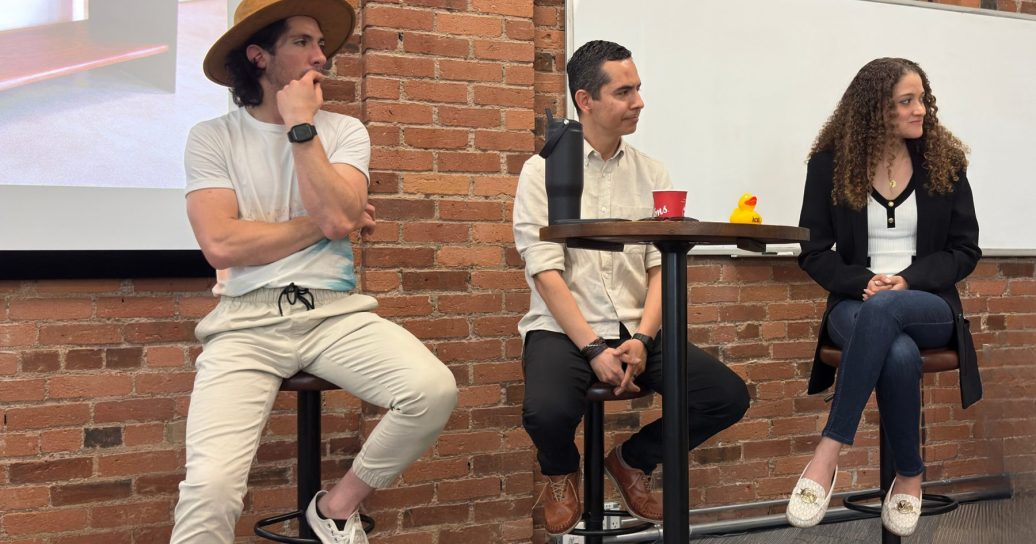
About the designers
Ana Carreño began her career in textile design before evolving into interior design, with a specialized focus on biophilic design. She is an instructor at Pacific Design Academy, Victoria BC.
Felipe Prado brings extensive experience across furniture, cabinetry, and product design and he is an owner of Luxe Home Interiors in Victoria, BC.
Dany Mantecón specializes in interior, furniture, and industrial design. He is an instructor at Pacific Design Academy, a builder in Victoria, BC, and the owner of Riverwood Crafting Co.