



After moving from Bangkok to Victoria, B.C., Yui White reflects on immigration, identity, motherhood, and learning to slow down while building a life that feels enough.
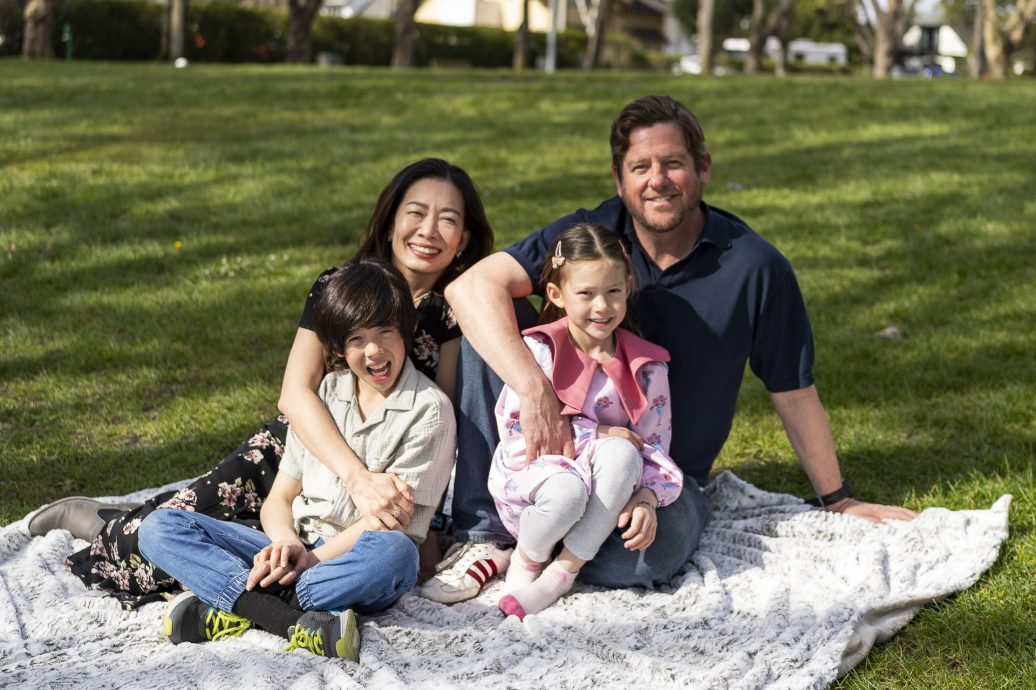
For most of her adult life, Yui White understood herself through momentum.
Bangkok—loud, kinetic, relentlessly alive—rewards people who can keep pace. Yui thrived there. Born and raised in Thailand’s capital, she grew up in a close-knit family that placed a strong emphasis on education, personal growth, and achievement. Yui built a successful career in finance and management, surrounded by lifelong friendships and a strong support network. She moved through demanding professional environments with confidence and created a life that was full in every sense of the word, whether in work, friendships, family, obligations, or opportunities.
It was also in Bangkok where she met her husband, Michael White, a Canadian expatriate, at a dinner party in 2008. They married in 2011 and built their life together in Bangkok, where Michael would spend more than two decades living and working. Their children, Zander and Persia, were born there. Their routines were established, their careers successful, their community deeply rooted. By most measures, it was a life already working.
Which is precisely why leaving it mattered.
Leaving what already worked
When the family relocated to Victoria, B.C. in the summer of 2025, settling in the same neighbourhood where Michael grew up, the move was a deliberate decision to interrupt a life that had become highly functional.
In many ways, Yui says, the family chose to create friction, knowing they were doing so from a position of stability. “There was nothing wrong with our life in Bangkok,” she explains. “That’s what made the decision difficult. We weren’t trying to escape anything. But as the children grew older, we started asking ourselves what kind of everyday life we wanted them to experience, and what kind of life we wanted for ourselves.”
When the pace changed
The contrast between Bangkok and Victoria could hardly be sharper. One is dense, vertical, fast-moving, and overstimulating. The other unfolds slowly: beaches, neighbourhood walks, quiet mornings, children walking to school.
What surprised Yui was not simply the pace of life in Victoria, but what happened when her own pace changed with it.
In Bangkok, her days were measured by movement and productivity, with schedules packed with work commitments, household responsibilities, and other markers of success. Achievement was visible and constant. In Canada, much of that external structure disappeared, replaced by a quieter inward reflection, one that was unfamiliar at first.
For the first time in years, there was space, but there was uncertainty about how to use it. Yui confesses: “At first, I think I had to sit with the discomfort of slowing down—taking a slow walk in nature instead of running off to appointment after appointment. You realize how much of your identity can become tied to productivity.”
“You realize how much of your identity can become tied to productivity.”
Rethinking achievement and motherhood
Yui now finds herself drawn toward practices that would once have seemed secondary to professional ambition. She places greater value on wellness, mindfulness, time outdoors, and being fully present. She speaks less about achievement now and more about building a life that feels enough rather than defined by outcomes.
“What does ‘enough’ look like?” she asks thoughtfully. “I think I’m still learning that.”
The shift has also reshaped her understanding of motherhood.
Like many immigrant families, the Whites moved largely for their children. But Yui resists reducing the decision to a simple calculation about schools or opportunity. Instead, she speaks about atmosphere and stepping into a different version of daily life that living in Canada could offer them. A life that felt worth working toward, rather than immediately available.
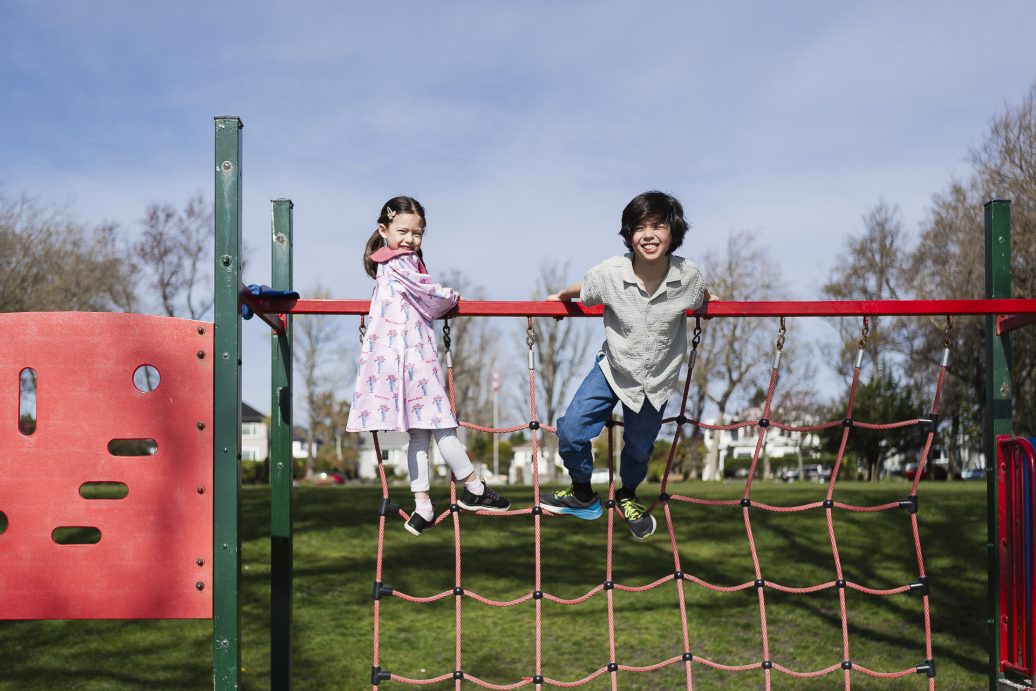
In Bangkok, their children were growing up in an urban environment shaped by structure, efficiency, and constant activity. In Victoria, Yui noticed almost immediately how differently childhood could look. Afternoons feel less rushed, though learning how to live inside that slowness has taken time. Nature is woven into ordinary routines, like walking to school. Community exists in quieter, less formal ways, through moments as small as swapping cookie recipes at hockey practice.
Living in the in-between
While the change may sound perfect, Yui recognizes that the adjustment has not been seamless. Moving countries as adults often means relearning and adjusting to new ways of doing things. Suddenly, even familiar tasks require new approaches: systems, expectations, social cues, parenting norms. Yui describes existing in an in-between space—no longer fully anchored in Thailand, but not yet entirely rooted.
That tension has made her more conscious of identity in ways she never previously considered.
In Victoria, she has found comfort among a close-knit Thai community that gathers regularly over meals. The dinners offer familiarity, humour, shared language, and the kind of cultural shorthand that requires no explanation.
But the gatherings also reveal something more complicated. “They remind me that belonging doesn’t happen all at once,” she says. “You can feel welcomed somewhere and still not fully feel rooted yet.”
“You can feel welcomed somewhere and still not fully feel rooted yet.”
For Yui, belonging has become less about choosing between identities and more about learning how to hold multiple versions of herself at once: Thai, immigrant, mother, former executive, newcomer, entrepreneur, Canadian resident.
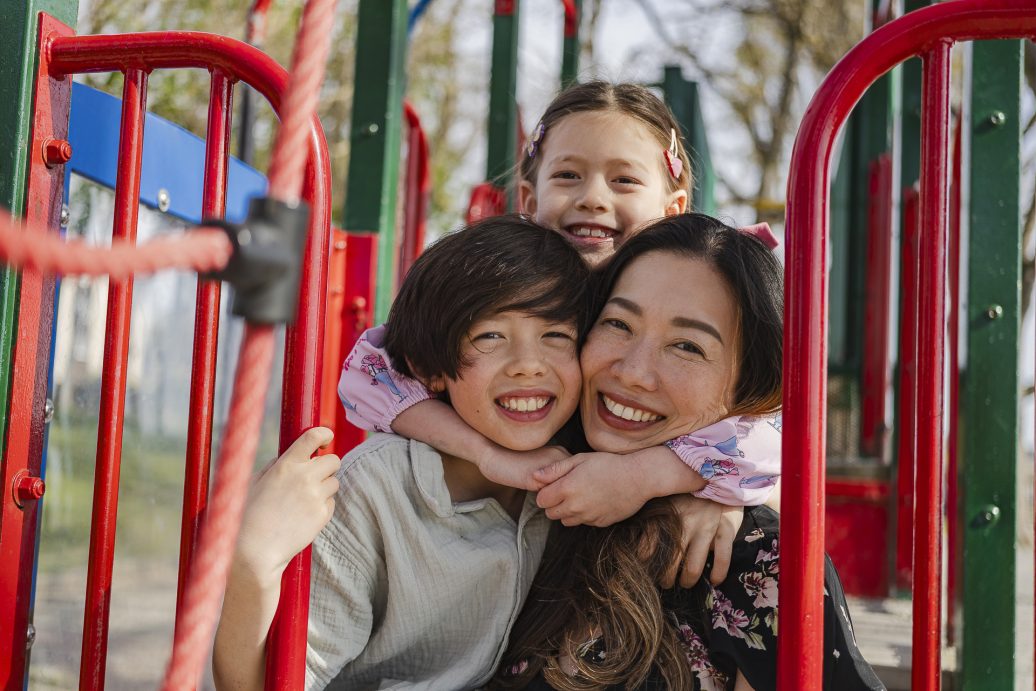
Assimilation is not an end goal for her, but nor is she interested in preserving herself unchanged. At this stage of her life, Yui describes her identity as evolving and reshaping through lived experience.
There are parts of her old life she wants to keep: ambition, adventure, independence, connection to Thai culture. Other parts she is reconsidering include constant busyness and the pressure of equating worth with accomplishment.
“I think I’m learning that building a life isn’t only about what you achieve,” she says. “It’s also about how you experience your days, your relationships, your community.”
Nearly a year after arriving in Canada, Yui still considers herself in transition. Belonging, she has discovered, is something assembled gradually through shared meals, quiet routines, unfamiliar seasons, children adapting, friendships deepening, and the slow realization that a different kind of life may also be a fuller one. The journey remains unfinished. But if there is one thing she feels certain of, it is that the life she is building in Canada was never about leaving something behind. It was about consciously choosing what she wanted to move toward.