




Filipino youth in Victoria meet pain with presence
The sound of grief carried farther than any siren. It reached Victoria in an instant. While the violence unfolded on the mainland, its impact reverberated in Victoria, where many in the Filipino community have close ties to Vancouver. As phones lit up and panicked messages traveled between cities, families and friends desperately sought information while struggling to make sense of a tragedy beyond imagination.
It’s not often talked about, being obvious for the many diasporic groups that flow back and forth between Vancouver and Vancouver Island—but the connection is deep, routine, and lived. Whether it’s weekend grocery trips for specialty goods, monthly faith gatherings, or jumping on the ferry or harbour plane for work, doctor’s appointments, family birthdays, or festivals, this movement forms a quiet backbone of diasporic life. For Filipinos, it’s not occasional—it’s essential. A support system in motion, held together by care and proximity, even across the water.
Festivals like Lapu Lapu Day serve as rare but vital spaces where the diaspora can feel whole, even for a moment. When that moment was shattered, it wasn’t a question of whether Victoria would respond. It was only a matter of how.
Mobilizing in the Moment
When news of the tragic attack at Vancouver’s Lapu Lapu Day Festival broke, Filipino youth in Victoria didn’t wait for instructions—they gathered. Within hours, they transformed a moment of shock into a space for collective care, organizing a vigil that became a focal point for mourning, resistance, and solidarity. For Anakbayan Victoria, this was not an isolated response, but a reflection of something deeper: a commitment to kapwa—the Filipino value of shared being—and a belief that community is not just inherited, but built.
“When we received news about what had happened that Saturday, the night of April 26—the night of the attack—we all happened to be together. So we pretty much immediately united on mobilizing,” recalls Eileen Tiamzon, chairperson of Anakbayan Victoria, described as a “progressive youth org in Victoria, BC” in their Instagram bio. The group wasn’t sure what that mobilization would look like or how fast they could act, but as Eileen puts it, the “gravity and intensity of the situation” compelled them to create a space for community members to grieve as soon as possible.
From Grief to Gathering
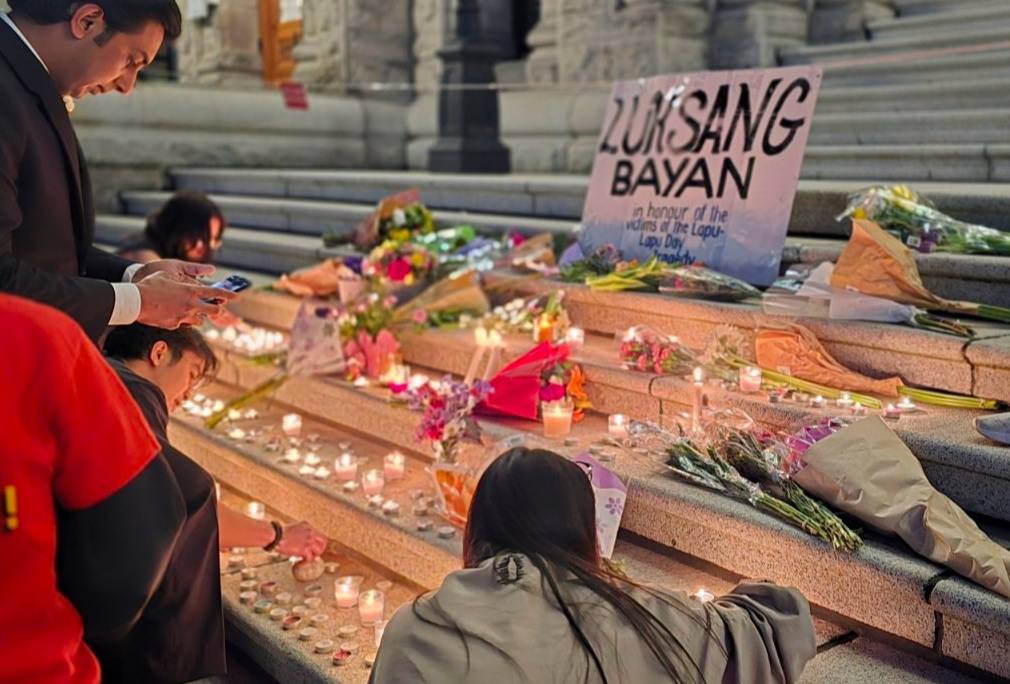
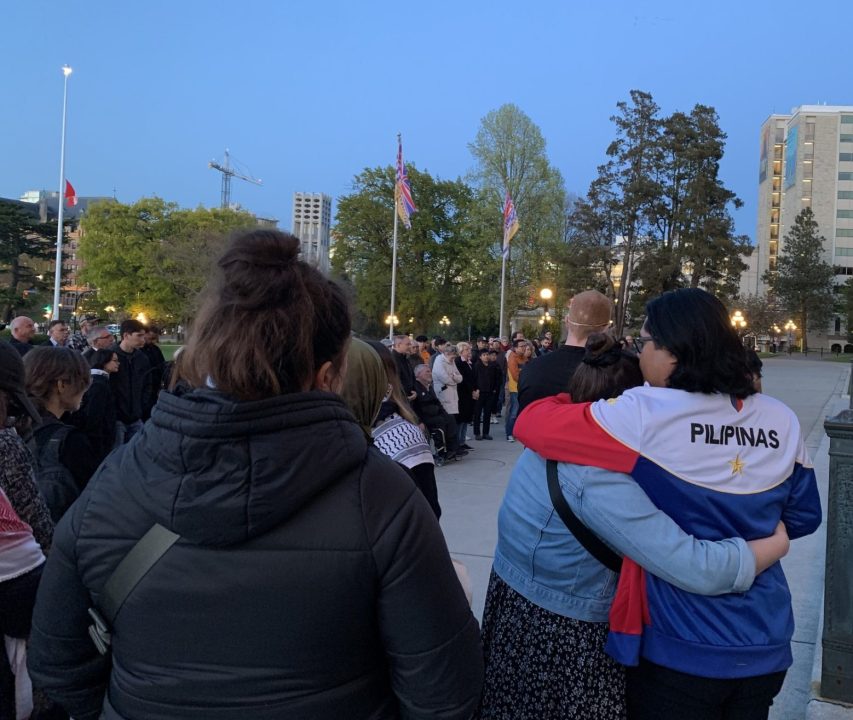
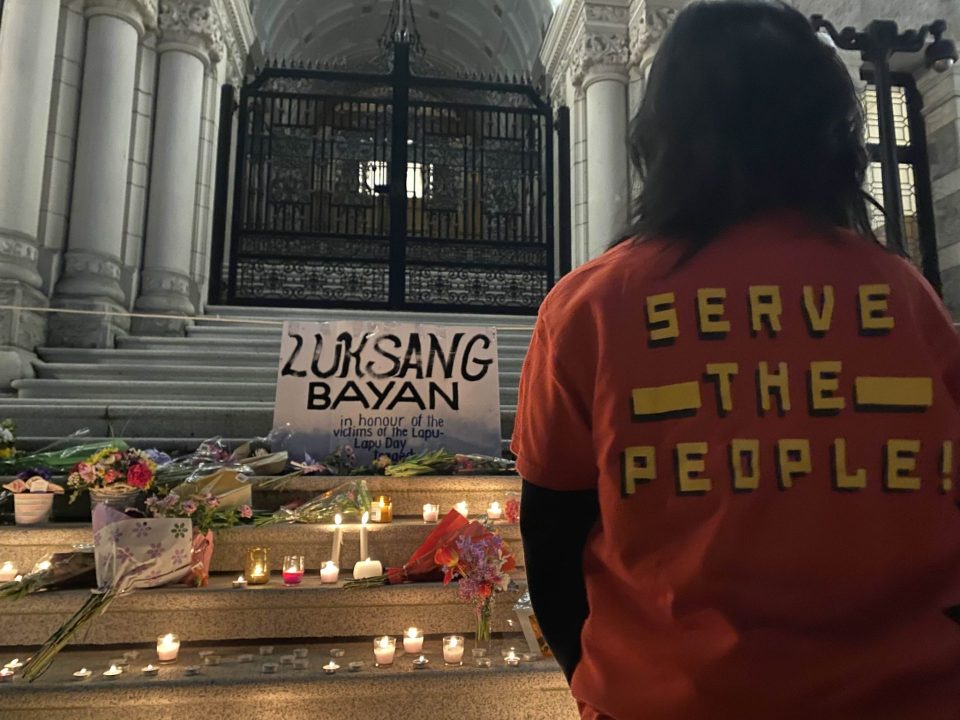
In response to community need—and an immediate outpouring of support—Anakbayan Victoria began coordinating a vigil for Sunday, April 27, less than 24 hours after the attack. Details about the evening gathering on the steps of the B.C. Legislature were shared at 4:30 p.m. By 8:00 p.m., more than 150 people had assembled in collective mourning. As Eileen recalls, “Even here in Victoria, there were so many people who were feeling this so deeply.” A memorial of flowers, condolences, and candles remained on the steps for many days following the vigil and a book of condolences was made available in the Hall of Honour for anyone to sign.
When asked what such a rapid and heartfelt turnout says about the city, Eileen emphasizes that it’s not only a reflection of Victoria’s strong solidarity networks—it also reveals how deeply the broader community cares for its Filipino neighbours:
“I meet a lot of non-Filipinos who talk about how they knew or grew up with other Filipinos or the culture of care that they’ve brought forward in their lives, so that when these tragic things happen to us, they also feel compelled and feel called to show care. I had a lot of non-Filipino community members reach out to me, wanting to express their solidarity and their support during this time. And so I think that is really how our community and our culture can go full circle, even if someone isn’t Filipino.”
Part of a Larger Tapestry
This gathering—this act of collective care—was one of many held across Canada in the days following the car attack in Vancouver. The Fil-Can diaspora is vast, but Anakbayan Victoria hopes to centre itself in a unique space within the landscape of local community response and support.
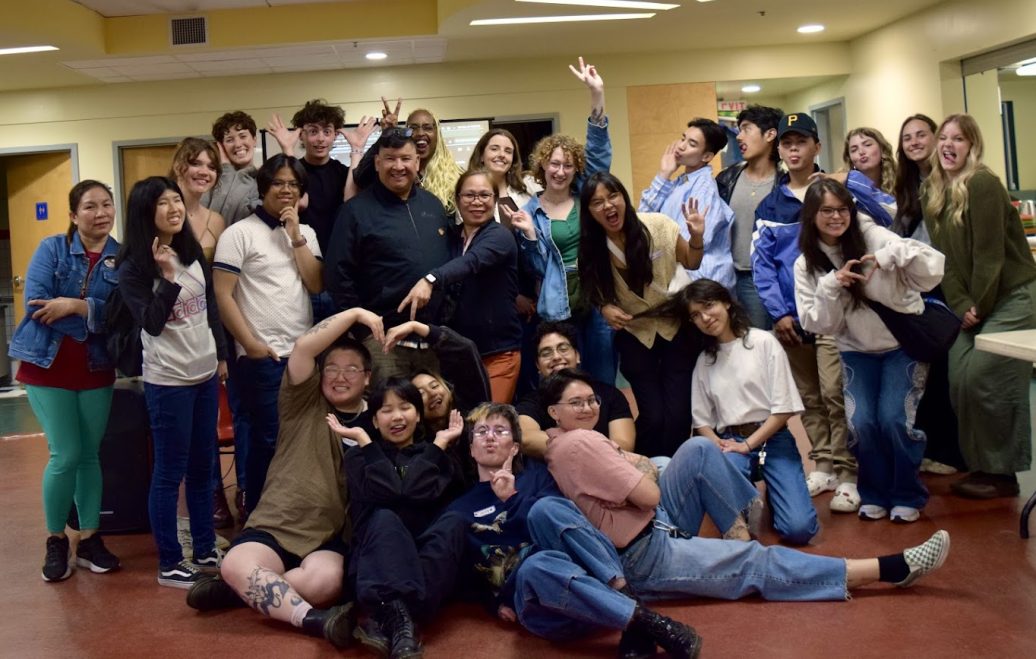
Anakbayan translates to “children of the nation.” The Victoria chapter is part of Anakbayan Canada, which belongs to a broader international network of Filipino youth organizations rooted in the Philippines. While many Victorians may be familiar with the Bayanihan Community Centre, operated by the Bayanihan Cultural and Housing Society—and long-standing downtown home to the Victoria Filipino Canadian Association, Victoria Filipino-Canadian Caregivers’ Association, Victoria Filipino-Canadian Seniors Association—Anakbayan Victoria operates with its own mandate, structure, and membership as a youth-led organization.
Eileen explains that the “organization was very much formed out of the need to [help] Filipino youth to make sense of why their families had to migrate out of the Philippines” and that it also “serves as an avenue for second and third generation Filipinos to reconnect with their heritage and learn more about the history of the Philippines and the ongoing struggles that their fellow Filipinos or kababayans face here in Victoria and back home.” Another important aspect of their mission is creating opportunities for Filipino youth in Canada to engage politically in ways that remain connected to both their experiences in the diaspora and ongoing issues in the Philippines and “ensuring that there are very accessible and culturally relevant spaces for racialized youth to be engaged in politics.”
The lens that guides Anakbayan Victoria’s work doesn’t preclude collaboration with other Filipino cultural organizations. In fact, Eileen is unequivocal about the deep interconnectedness between individuals and groups within the diaspora: “We are very deeply united with the rest of our Filipino community here in the diaspora through the struggles that we’ve all experienced.” She adds that it’s not uncommon to make eye contact with someone who might be Filipino and strike up a conversation on the spot: “I think it’s very natural for a lot of us to just spark up a conversation—and it’s not odd. There’s just a strong desire to be around our community.”
Organizing, Differently
Anakbayan Victoria’s response to the tragedy echoed a broader shift in how this generation approaches crisis—one arguably shaped by years of organizing through the intersecting realities of a global pandemic and a renewed reckoning with racial injustice.
Instead of turning to formal protocols or waiting for a coordinated response, the group moved quickly and instinctively, prioritizing relationships over roles. Eileen suggests that the group’s open-mindedness and idealism lend them more freedom and grassroots support to act quickly:
“We also have a lot of vigour. Having the youth mobilize with these traits can act as an important banner for people to rally behind, and for a community to rally behind, especially when our future feels threatened. We’re able to act very quickly and not by a specified step-by-step rule book…because it was very clear that people needed this, and people didn’t want to just cry alone or grieve alone, [they also needed] to have a physical space to visit throughout the week as well.”
This ability to normalize grief and healing as a part of organizing is also a hallmark of this generation, along with understanding crisis in context—connecting local tragedy to systemic injustice, colonial histories, and global migration. “We talk about this tragedy, how it ripples beyond geographic borders. Yes, it happened in Vancouver, but so many Filipinos migrate [or are] forced to migrate, and there’re so many victims, families still back home in the Philippines, thousands of miles away, who are just waiting for justice and who are waiting to be able to properly mourn their family members, who they lost unexpectedly,” laments Eileen.
Carrying One Another, Carrying On
Grief may have brought people together—but connection is what continues the work. “Filipinos—we come to Canada for better opportunities, for a better life for our families,” Eileen says, and adds that there is “a collective nature of being out here in a diaspora and being part of a diaspora community. And it shows that despite being separated by water, by borders, whatever, we’re really connected by relationships and care for a community—that doesn’t change anywhere you go.”
As Canada’s Filipino population approaches one million, the work of organizing, caregiving, and building community continues—led by young people like those at Anakbayan Victoria, and grounded in the foundations laid by those who came before. What happened in Victoria wasn’t only a response to loss; it was part of a longer arc of presence, care, and cultural continuity. Grief is not the end of the story. It’s one way the next chapter begins.