From April to July 2025, the Rwandan community will engage in a period of commemoration and remembrance of the genocide against the Tutsi that occurred in Rwanda. This initiative, inspired by a Rwandan youth movement, includes organizing “A Walk to Remember.”
The island weather is beautiful on this Saturday, May 31, 2025. Adjacent to Victoria City Hall, Centennial Square is lively—diverse community members marking the launch of summer festivities with concerts, music and dance performances in colourful outfits under the City of Victoria’s black and white canopies.
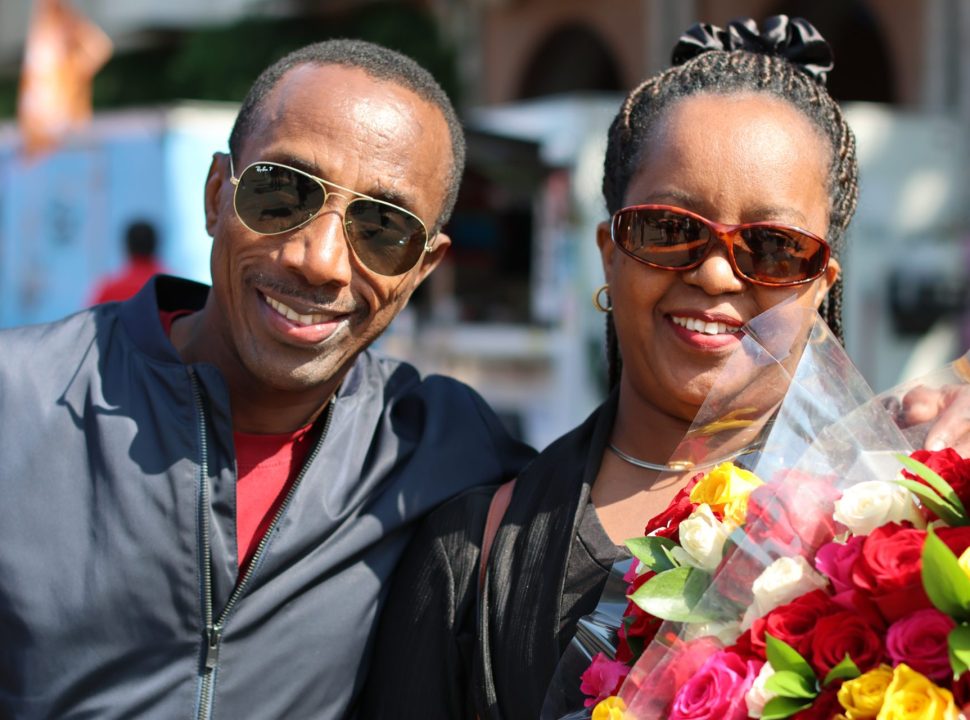
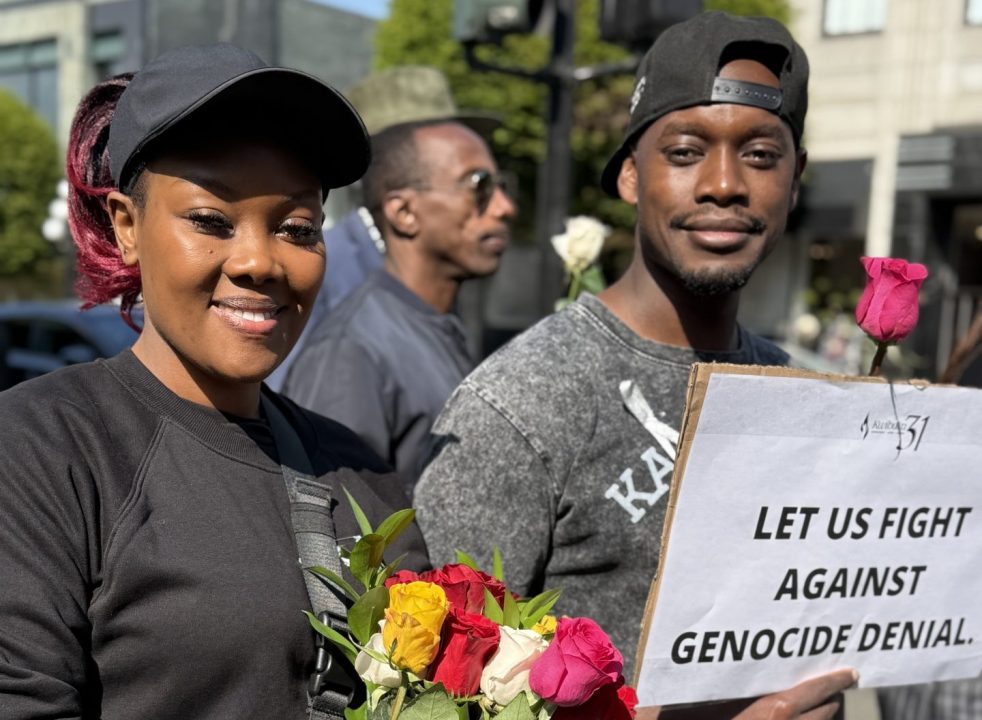
Just off to the side, facing the stage, a small group begins to form, most dressed in black. Smiles, waves, and hugs are exchanged, and faces light up for a few moments. The women carry bouquets of yellow, pink, and red roses wrapped in cellophane. In the bright sunlight almost everyone is wearing sunglasses or a hat.
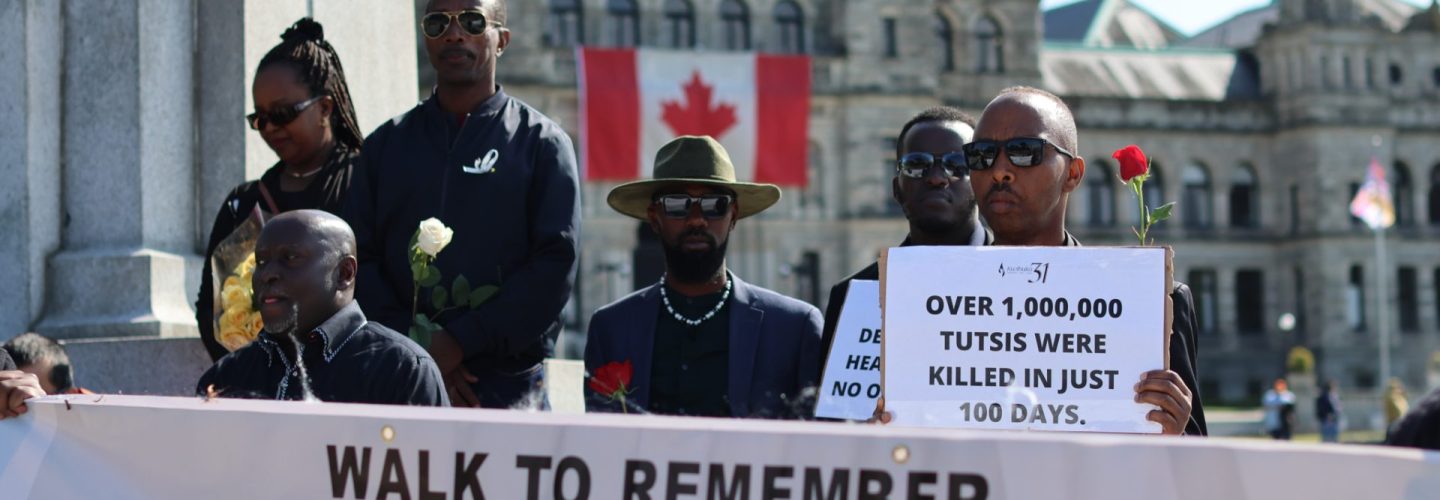
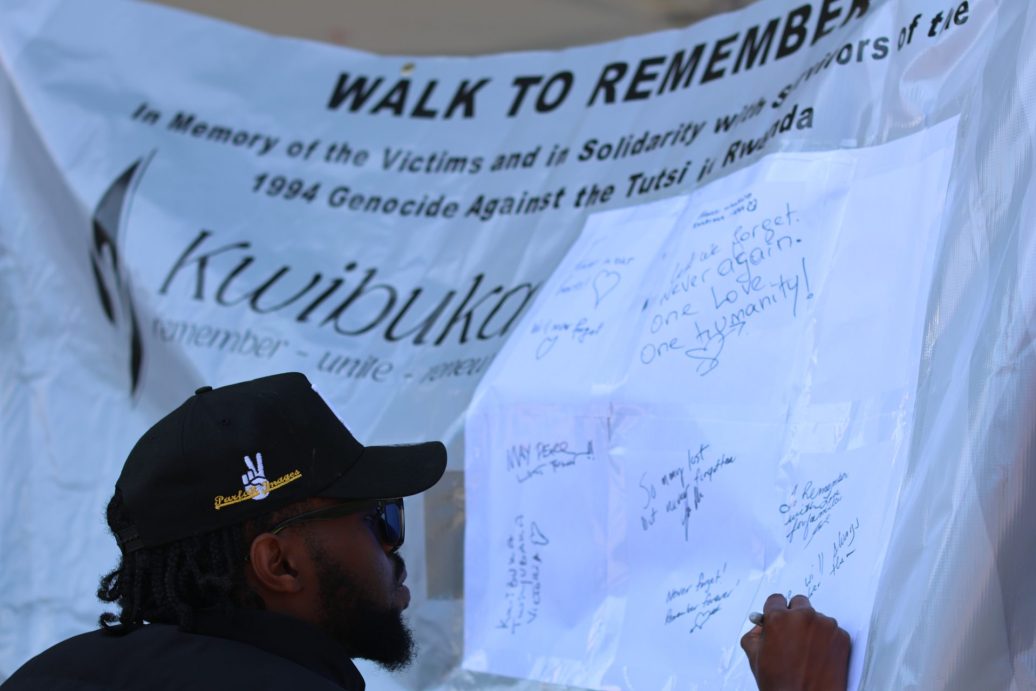
A few members of the group stretch out a wide, white banner with the message: “Walk to Remember” in all caps, and “Kwibuka” written below. People pass a marker from hand to hand to add their signatures and dedications on the blank space below the title. One Love, One Humanity, Lest We Forget, We Will Never Forget, Forever in Our Hearts—messages written in blue ink and framed with doodled hearts.
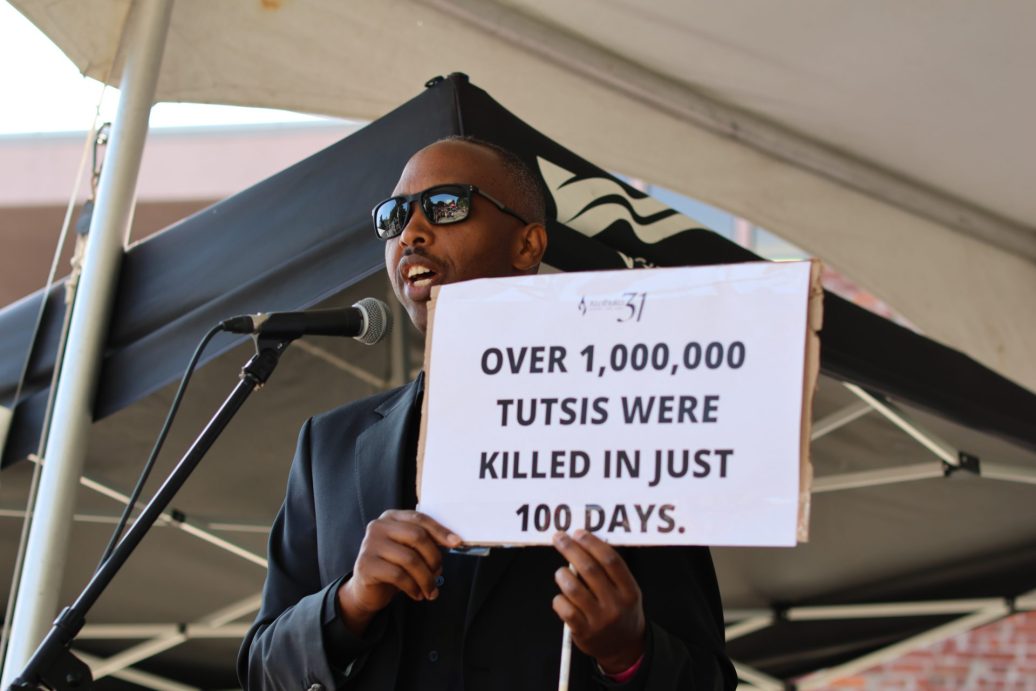
The hosts of the main event taking place in the square offer a moment for the Walk to Remember organizers to speak to the festival audience. On the raised stage, speaker Anselme Hategekimana takes the microphone, the banner stretched out beneath him and held by two young men with sombre faces. After delivering a land acknowledgement, Anselme announces the start of the commemorative day, calling for remembrance of the genocide against the Tutsi in Rwanda on the 31st anniversary of the tragedy, then invites those present who wish to participate to join the procession to the BC Legislature.
The speech is a sharp departure from the earlier festive cultural celebrations, but the audience is warm and receptive—sympathetic. Perhaps the walk will add some new supporters.
Raising awareness
The organizers of this and other local commemoration events are volunteers from Victoria’s Rwandan community. The dedicated group hopes to formalize the “Kwibuka Association of Rwandans in Victoria” sometime this year with a membership election.
Kwibuka means “to remember” in Kinyarwanda. The period of remembrance spans the months of April and May and officially concludes on July 4—exactly 100 days. From April 7 to July 4, 1994, more than a million Tutsi were exterminated. July 4 marks the day of the liberation of the Tutsi by the Rwandan Patriotic Army (RPA), now celebrated as Rwanda’s Liberation Day. Rwanda observes two public mourning holidays: Kwibuka and Liberation Day.
Anselme discusses the choice of the date for the commemorative day. “It depends on the availability of each member,” he explains. “The month of April is particularly difficult for the Rwandan community, as the genocide began on April 7, 1994 throughout Rwanda.” The significance of this day is deeply connected to the personal history of each member.
“For us, this day symbolizes the memory of all our friends and family members who are no longer with us. It aims to raise awareness of the necessity to prevent such tragedies from occurring again. It is a call for peace and harmonious coexistence.”
Not relegated to the past
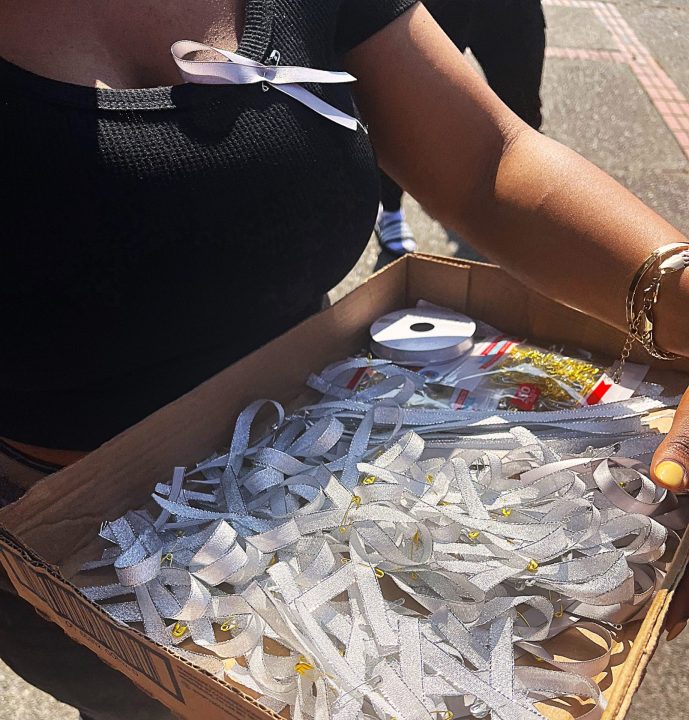
Carrying a carton loaded with grey ribbons, a symbol of awareness for the genocide against the Tutsi, Irène Shema moves from small group to small group, all members of the Rwandan community of Victoria gathered in the square. “I am part of the committee responsible for organizing the commemoration for the Tutsi. I participate because it is essential to explain to the public that this could have happened to them as well.”
For Irène, the risk of genocide is not limited to certain countries, and the issue is far from being an old story relegated to the past. It is a conflict that remains relevant: “In the Democratic Republic of Congo, the perpetrators of the genocide are waiting for the opportunity to return to Rwanda to finish what they started. They are armed and trained by the Congolese army, as well as by their militia, the Interahamwe, which already existed during the genocide.”
“All of this happened after the Belgian colonizers appropriated Rwanda and artificially created ethnic groups based on activities and physical characteristics, in order to divide and conquer,” she adds. “This reality is still deeply rooted in the mindset of the authors of the genocide and their descendants.”
Moving together
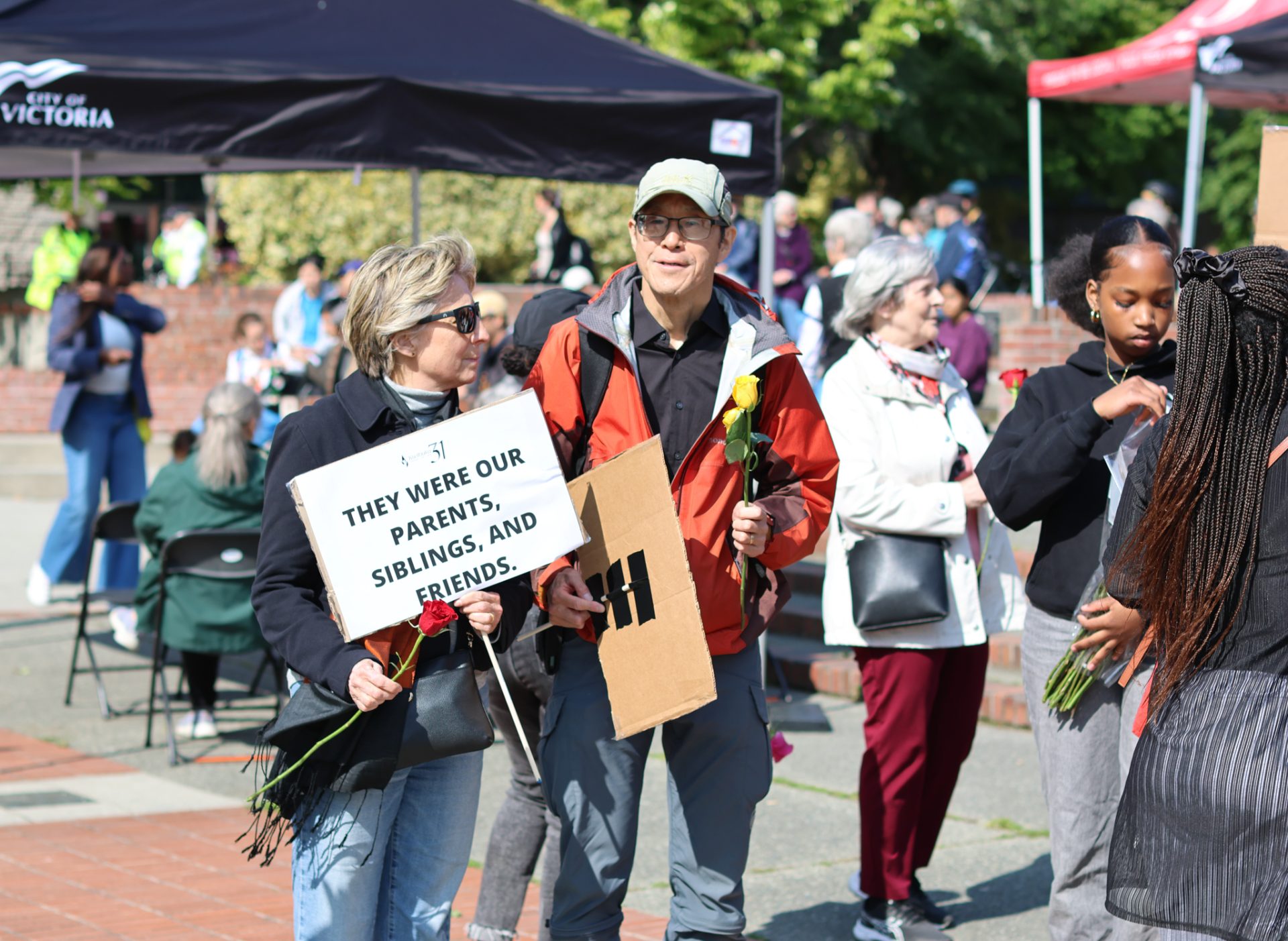
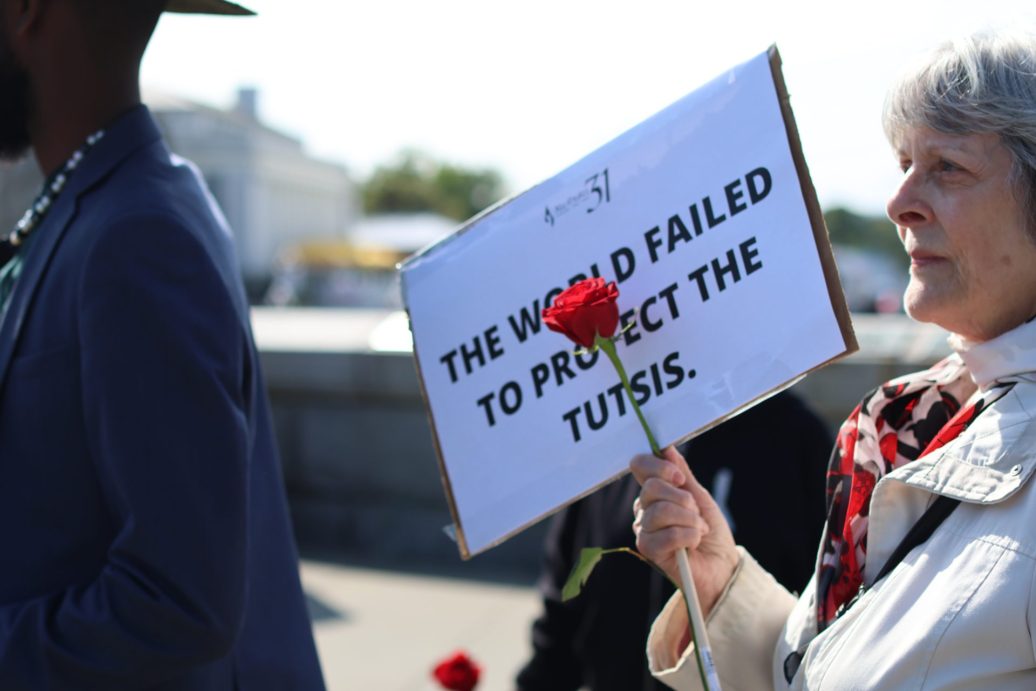
Gradually, signs are distributed. Participants prepare to leave and organize themselves in order. Bystanders approach the group to inquire about the meaning of the march, and they are happy to respond. Some of the strangers commit to the cause and firmly take hold of a sign in support.
Soon, the signal to start is given. The procession moves forward and passersby, intrigued by this sombre parade, turn to observe and read the placards. Some fall in and join those already walking.

A generation removed, but not
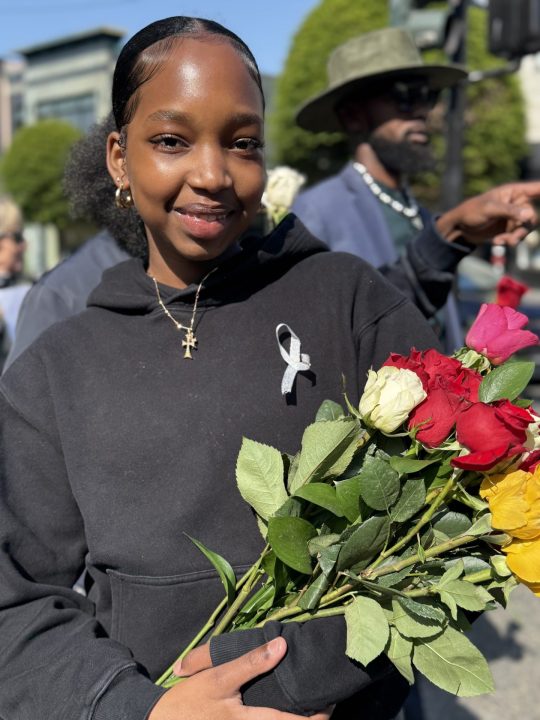
A young girl smiles at those around her despite her sadness. This is Tamara, a 17-year-old student, who also holds a bouquet and wears a silver-grey ribbon. Having arrived in Canada at the age of 5, Tamara carries a painful family history: “My mother is a genocide survivor. At the time, she was living with her parents in Kigali, the capital of Rwanda. Her parents decided to seek refuge in her maternal grandparents’ village. Tragically, she lost her brother and sisters, as well as her grandmother. She was only 13.”
Tamara’s mother will join her later, after the walk, at the ceremony on the Camosun College campus, where she is scheduled to speak. “My mother doesn’t talk much about what happened because it’s very difficult for her. Maybe I will learn more tonight. She wants to remember those she lost, her loved ones who were killed,” she shares. Tamara plans to continue her studies abroad, but hopes to return to Victoria because she loves the ocean.
The lives lost
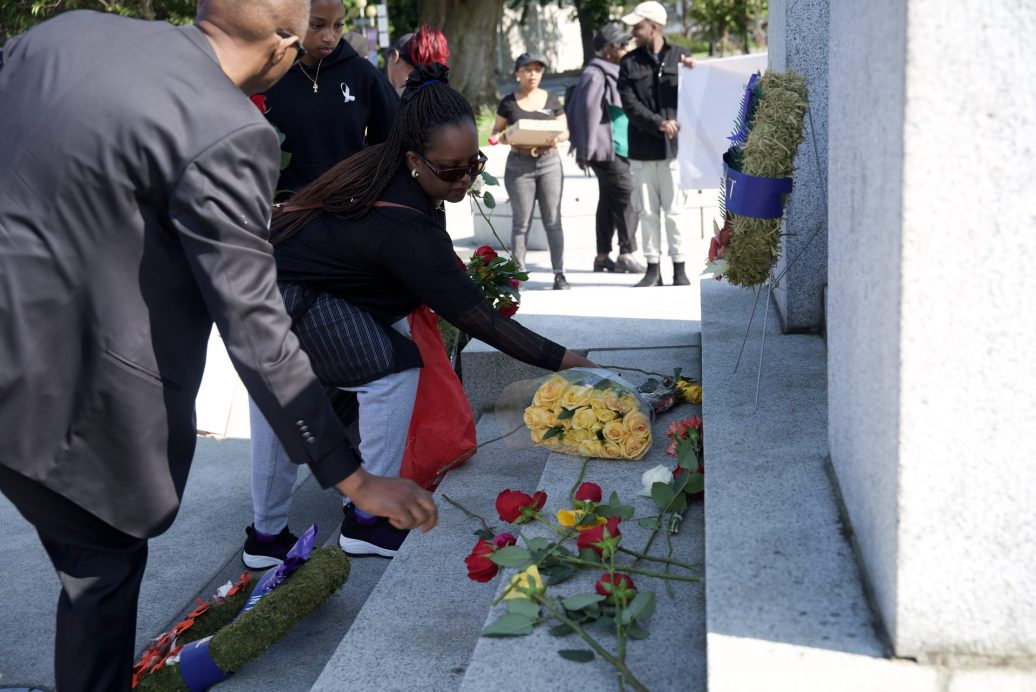
The procession will stop at the Cenotaph, a bronze war memorial located on the Legislative grounds commemorating the Canadian lives lost in World War I, World War II, the Korean War, and the “Afghanistan Mission.” It is here that flowers will be laid to honour the memory of the genocide victims as there is no other designated space for the Rwandan community to gather.
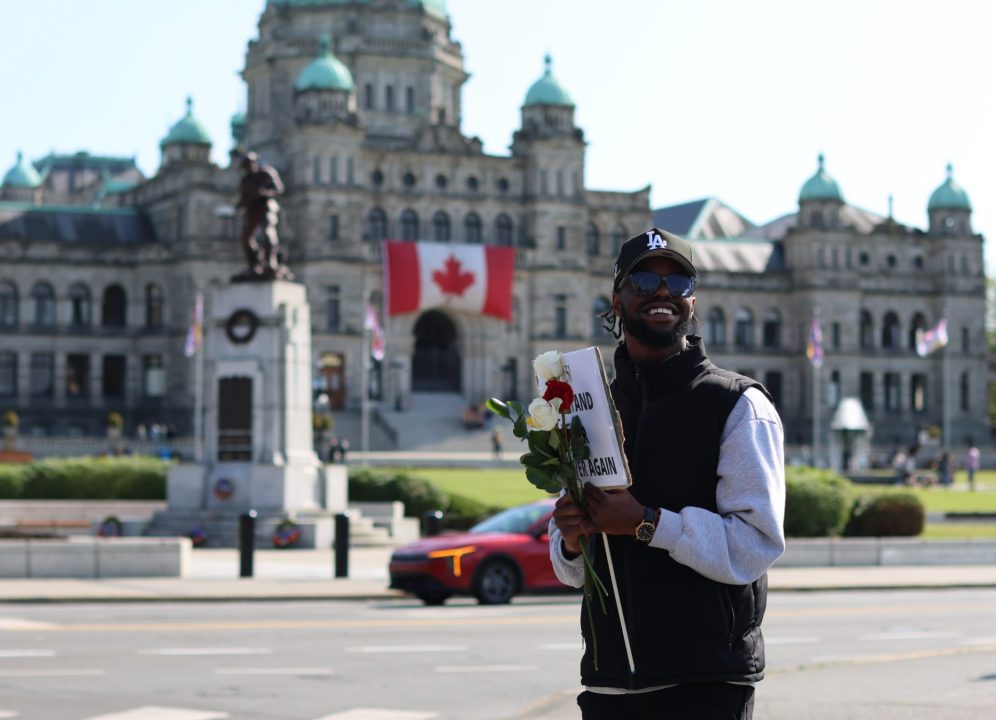
The walk pauses near the intersection of Belleville and Government Streets and the Centennial Carillon bells begin to ring out on the hour. Their chiming continues in the background as the Association’s president, Augustin Rusekampunzi, starts to speak:
“We must ensure that this does not happen again. It was said that it was a surprise, that people didn’t know. But I think we know that’s not true. The international community was silent and they allowed more than a million people to die.”
As the large group moves to cross the busy street, a bagpipe player—a popular figure on the Inner Harbour during the summer months—begins to pipe Amazing Grace.